













Links within this page: Multiple Presentations | Key Dates | Tracks | Submission Guidelines | Review Process | Poster Details | Our Partnership with Showcare
We invite abstracts for research that is topical to bioinformatics and computational biology, which is in progress (unpublished, formerly Late-Breaking Research) or previously published within the last 18 months (previously Highlights Track) for consideration for oral and/or poster presentation.
Your abstract should be submitted to the Communities of Special Interest (COSI) or Open Session Track that most accurately reflects the area of the work. (You will have the option to identify two other tracks that may also be suited to your research area during your submission). You can learn more about COSIs here.
Talks and posters are organized according to scientific topics which are covered by the COSIs and open sessions listed and described below. Please note, abstracts are not limited to COSI and open session topics and if the topic of your submission falls outside the listed COSIs you can choose the "General Computational Biology" area. Your abstract should convey a scientific result and should not be an advertisement for any commercial software package.
Multiple presentations
The same talk is not permitted to be given more than once as an oral presentation at ISMB. Research may be presented as both a talk and a poster if and only if it is submitted as two individual submissions with TWO different presenters. Having the same person deliver two (or more) different talks is NOT PERMITTED on the same topic. This allows for many people from one lab to present the work of the lab. A presenting author may present NO MORE THAN ONE talk or poster on the same topic.
For a variety of reasons, ISCB strongly prefers that scientific research accepted for oral presentation be presented in-person at the conference venue. We understand that some presenters will have valid reasons to avoid in-person attendance. ISCB will grant remote presentation options for reasons associated with maternity/paternity leave, care for a family member, personal/medical disability, sickness, financial hardship, or potential visa problems. If your research is accepted for oral presentation and you are unable to present in person, ISCB requires notification at the time of acceptance and no later than May 15, 2024. If unable to participate in person you will need to request a waiver by writing
Any pre-approved virtual presenters will be required to provide a pre-recorded talk for the virtual platform library in advance of the conference as a precaution due to possible technical issues.
ISMB/ECCB 2025 follows the ISCB policy for acceptable use of large language models (https://www.iscb.org/iscb-policy-statements/iscb-policy-for-acceptable-use-of-large-language-models).
Key Dates
Any recent research, published or unpublished is eligible for submission. Different submission types have different deadlines and notification dates. Be sure to check the below table or key dates page to find the dates relevant to your submission.
Poster only submissions DO NOT require any materials to be uploaded during submission. Submissions are evaluated on the 250 word text abstract provided during submission.
Tracks
3DSIG: Structural Bioinformatics and Computational Biophysics | BioInfo-Core | Bioinformatics in UK | BioVis: Biological Data Visualization | BOKR: Bio-Ontologies and Knowledge Representation | BOSC: Bioinformatics Open Source Conference | CAMDA: Critical Assessment of Massive Data Analysis | CompMS: Computational Mass SPectrometry | CSI: Computational and Systems Immunology | DREAM Challenges | Education | ELIXIR/NIH-ODSS | Equity and Diversity in Computational Biology Research | EvolCompGen: Evolution and Comparative Genomics | Function: Gene and Protein Function Annotation | GenCompBio: General Computational Biology | HitSeq: High-throughput Sequencing | Innovation at the Intersection: Industry's Role in BIoinformatics | iRNA: Integrative RNA Biology | MICROBIOME | MLCSB: Machine Learning in Computational and Systems Biology | NetBio: Network Biology | NIH Track on GenAI, Cyberinfratructure, Digital Twins, and Quantum Computation | Publications - Navigating Journal Submissions | RegSys: Regulatory and Systems Genomics | Stewardship Critical Infrastructure | SysMod: COmputational Modeling of Biological Systems | Text Mining: Text Mining for Healthcare and Biology | TransMed: Translational Medical Informatics | VarI: Variance Interpretation | WEB: Workshop on Education for Bioinformatics
|
3DSIG: Structural Bioinformatics and Computational Biophysics Abstract Area Chairs |
Structure-based function prediction; Docking, analysis, prediction and simulation of biomolecular interactions such as protein-protein, protein-ligand and protein-nucleic-acid; Protein dynamics and disorder; Evolution studied through structures; Application of structure to systems biology; Macromolecular assemblies; Structural genomics; 3D databases and data mining; Molecular visualization; Relevant methods of structure determination particularly hybrid methods; Prediction and analysis of protein domains; Membrane protein structure analysis and prediction; The structural basis of immunology. |
|
Abstract Area Chairs Learn more about Bioinfo-core here |
The major goal of this COSI is to offer a community to people who manage and staff bioinformatics cores around the world. Topics of interest to this group for our ISMB workshop include topics that core members would find interesting or useful. This includes but is not limited to: management topics relevant to cores, core formation and setup, workflow development, reproducibility, best practices, training, or exploring analysis of new types of data. |
|
Abstract Area Chairs Learn more about Bioinformatic in the UK here |
Recognising that the UK hosts the 2025 meeting, a one-day UK track will be dedicated to showcasing the UK’s research, innovation and talent, and includes a dedicated poster reception and networking event. The track will focus on Biodiversity and Agritechnology and Health, and encouraging contributions on methods (including AI), standards and applications. Abstracts for talks and posters in these areas are invited from Academic or Industry researchers in either Research career paths (faculty, fellows, postdocs, postgraduates), or Technical Professional paths (including but not limited to data stewards, data scientists and Research Software Engineers). Submissions are also encouraged from researchers and RTPs involved with data management and the data infrastructure, and bioinformaticians involved in interpreting the data and making an impact on health and biodiversity. The track will also feature invited keynotes and an industry panel. An evening poster reception will provide an opportunity for socialising and networking. The track is open to all conference delegates. All speakers, poster presenters and panel members will be drawn from UK institutions. The sessions will be coordinated by a Programme Committee, who will consider scientific and technical excellence as the primary consideration but will also seek to select papers that represent the breadth and diversity of the bioinformatics community in the UK, considering geography, scientific domain, career stage, and EDI principles. Only those based in the UK can apply for a poster and/or talk. |
|
BioVis: Biological Data Visualization Abstract Area Chairs Learn more about the BioVis COSI here |
The rapid adoption of data-intensive biology approaches creates enormous challenges for computational visualization techniques, which are needed to enable researchers to gain insight from their large and highly complex data sets. The goal of this session is to bring together researchers from the visualization, bioinformatics, and biology communities with the purpose of educating, inspiring, and engaging bioinformatics and biology researchers in state-of-the-art visualization research, as well as visualization researchers in problems in biological data visualization. Keywords: Visualisation, Visual Analytics, Education |
|
BOKR: Bio-Ontologies and Knowledge Representation Abstract Area Chairs Learn more about the Bio-Ontologies here |
|
|
BOSC: Bioinformatics Open Source Conference Abstract Area Chairs Learn more about BOSC here |
Launched in 2000 and held yearly since then, BOSC is organized by the Open Bioinformatics Foundation (OBF), a non-profit group dedicated to promoting the practice and philosophy of open source software development and open science within the biological research community. |
|
CAMDA: Critical Assessment of Massive Data Analysis Abstract Area Chairs Learn more about the CAMDA COSI here. |
The CAMDA track highlights and compares the latest methods and results in an international data analysis contest, with this year's topics including: (1) The Synthetic Clinical Health Records Challenge provides a rich set of highly realistic Electronic Health Records (EHR) tracing the diagnosis trajectories of diabetic patients, created with dual-adversarial auto-encoders trained on data from 1.2 million real patients in the Population Health Database of the Andalusian Ministry of Health. Predict relevant diabetes endpoints like blindness or cardiopathy from past diagnosis trajectories! (2) The Anti-Microbial Resistance Prediction Challenge features clinical isolates sequences. Predict resistance genes/markers and identify resistant bacteria! (3) The Gut Microbiome based Health Index Challenge features hundreds of WMS based taxonomic and functional profiles of healthy and unhealthy individuals. Take advantage of the Theater of Activity concept and compete already existing taxonomy based metrics! NOTE: CAMDA submitters should include a 3-5 page long abstract PDF |
|
CompMS: Computational Mass Spectrometry Abstract Area Chairs Learn more about the CompMS COSI here. |
|
|
Computational and Systems Immunology Abstract Area Chair |
Data-driven computational studies addressing fundamental or translational questions in immunology are also of interest. Potential topics may cover, but are not limited to:
We encourage researchers to submit abstracts showcasing innovative approaches and insights in these areas for consideration in our Special Session on Computational Immunology. |
|
Abstract Area Chairs Learn more about the DREAM Challenges here. |
The DREAM Challenges are crowd-sourcing to solve complex biomedical research questions. Together, we share a vision to enable individuals and groups to collaborate openly so that the 'wisdom of the crowd' provides the greatest impact on science and human health. Over sixty crowd-sourced DREAM Challenges have benchmarked informatic algorithms in biomedicine. DREAM has had over 30,000 cross-disciplinary participants from around the world that have volunteered as solvers. Over 105 academic journal publications have resulted from DREAM Challenges covering a range of disease areas. Learn more about the DREAM process - Pose > Prepare > Engage > Evaluate > Share
|
|
Education: Computational Biology Education Abstract Area Chair Learn more about the Education COSI here. |
A major goal of this COSI is to foster a mutually supportive, collaborative community in which bioscientists can share bioinformatics education and training resources and experiences, and facilitate the development of education programs, courses, curricula, etc., and teaching tools and methods. Keywords: education, training, training resources, curricula, competencies |
|
Abstract Area Chairs |
This is a closed track, it is not accepting abstract submissions. Biodata resources are essential to life science research, providing the infrastructure that supports data sharing, analysis, and discovery. However, maintaining reliable, long-lived services while adapting to rapidly changing scientific and technological landscapes presents an ongoing challenge. This session will bring together leading experts to examine how biodata resources are evolving to meet these demands. Through a series of insightful talks and discussions, we will explore how resource managers are driving innovation, ensuring sustainability, and addressing emerging needs in the global scientific community. Structuring Meaning: Ontologies and Knowledge Graphs in the Biodata Ecosystem Under the Hood: Building Scalable and Sustainable Biodata Infrastructure Demonstrating Value: Funding Models, Impact, and Engagement in Biodata Resources |
|
Equity and Diversity in Computational Biology Research Abstract Area Chairs |
This area is for research that examines issues of equity, representation, diversity, or other elements related to datasets, methods, or the field of computational biology at large. |
|
EvolCompGen: Evolution and Comparative Genomics Abstract Area Chairs Learn more about the EvolCompGen COSI here |
At the same time, evolutionary and comparative genomics are inherently “transversal” disciplines in that work in many other biological areas of research have some evolutionary component (e.g. cancer genomics, epidemiology, toxicology, population genetics, functional genomics, structural biology just to name a few). The scope of this COSI is intentionally kept broad. The track will feature a mix of proceedings, highlight, and invited talks. Priority will be given to contributions which are relevant to more than a single area of application, or to contributions which are not covered by more specialised COSIs. Keywords: Evolution, phylogeny, phylogenomics, comparative genomics, genome rearrangements, orthology, paralogy, recombination, lateral gene transfer, genome variation, population genomics, comparative epigenomics, epidemiology, cancer evolution genomics, genome annotation |
|
Function: Gene and Protein Function Annotation Abstract Area Chairs Learn more about the Function COSI here |
The Function COSI features the Critical Assessment of Function Annotation, an ongoing community challenge aimed at improving methods for protein function prediction. The Function-COSI holds annual meetings alongside ISMB. Also, we are conducting the multi-year Critical Assessment of protein Function Annotation, or CAFA, experiment. Keywords: Protein function prediction, machine learning, performance assessment |
|
Abstract Area Chairs |
Novel techniques in emerging areas of computational biology, including intersections with other fields. If all other areas are insufficiently descriptive of your work, please submit to the area below. NOTE that the submissions in this area can be moved, subject to chairs’ considerations. |
|
HitSeq: High-throughput Sequencing Abstract Area Chairs Learn more about the HiTSeq COSI here |
We seek contributions on any topic involving HTS data analysis including: genome assembly and haplotype phasing; transcriptome analysis; genetics and epigenetics variation; metagenomics and microbiome analysis; and new HTS platform data analysis (e.g. synthetic reads, long reads, nanopore). In addition to general sessions, we propose to have two specialized sessions to focus on current hot topics: a) long sequencing and mapping techniques, b) single cell sequencing applications, c) non-linear genome representations. Both of these topics have generated an enormous amount of interest recently. Keywords: sequencing, next generation, high throughput, algorithms, assembly, phasing, variation discovery, genotyping, metagenomics, microbiome, long reads, short reads, nanopre, pan-genomes, graph genomes |
|
Innovation at the Intersection: Industry's Role in Bioinformatics Abstract Area Chairs |
This is a closed track, it is not accepting abstract submissions. |
|
Abstract Area Chairs Learn more about the iRNA COSI here |
The goal of the Integrative RNA Biology session is to bring together experts in computational and experimental aspects of research in RNA Biology to cover new developments across this broad field of research. The meeting focuses on two major areas: (1) the development of computational and high-throughput experimental methods, and (2) the application of such methods to break new grounds in the study of RNA biology and disease. We aim to educate and inspire researchers in the field, novice and seasoned alike, by meshing together different aspects of Computational RNA Biology, and promoting cross-disciplinary collaborative research. Keywords: Transcriptomics, RNA processing, post-transcriptional regulation, non-coding RNA, RNA 2D/3D structure, alternative-splicing, alternative polyadenylation, RNA translation degragation and localization, genetic variants effect on RNA processing, RNA and disease. |
|
Abstract Area Chair Learn more about the MICROBIOME COSI here |
It therefore guides users in the selection and application of methods and in their proper interpretation. Furthermore, the COSI provides a platform for exchange and networking between method developers, and provides valuable information allowing them to identify promising directions for their future work. Keywords: microbiome, computational metaomics, microbial networks, pathogens, symbionts, (meta)omics-based diagnostics, microbial ecology and evolution The MICROBIOME Community of Special Interest aims at the advancement and evaluation of computational methods in microbiome research, especially metaomic approaches. Keywords: microbiome, genome reconstruction, metagenomics, metatranscriptomics, metaproteomics, microbial networks, microbial traits, symbionts, pathogens, genome-based diagnostics |
|
MLCSB: Machine Learning in Computational and Systems Biology Abstract Area Chairs Learn more about the MLCSB COSI here |
Molecular biology and all the biomedical sciences are undergoing a true revolution as a result of the emergence and growing impact of a series of new disciplines and tools sharing the -omics suffix in their name. These include in particular genomics, transcriptomics, proteomics and metabolomics, devoted respectively to the examination of the entire systems of genes, transcripts, proteins and metabolites present in a given cell or tissue type. Taking advantage of this wealth of genomic information has become a conditio sine qua non for whoever has the ambition to remain competitive in molecular biology and in the biomedical sciences in general. Machine learning naturally appears as one of the main drivers of progress in this context, where most of the targets of interest deal with complex structured objects: sequences, 2D and 3D structures or interaction networks. At the same time, bioinformatics and systems biology have already induced significant new developments of general interest in machine learning, for example in the context of learning with structured data, graph inference, semi-supervised learning, system identification, and novel combinations of optimization and learning algorithms. Keywords: Machine Learning, Data Mining, Deep Learning, Artificial Intelligence in Bioinformatics and Computational Biology |
|
Abstract Area Chair Learn more about the NetBio COSI here |
Keywords: networks, pathways, systems, network analysis, disease networks, disease pathways |
|
NIH Track on GenAI, Cyberinfrastructure, Digital Twins, and Quantum Computing Abstract Area Chairs |
This is a closed track, it is not accepting abstract submissions. This full-day track will explore the transformative potential of cloud and emerging technologies in biomedical research, focusing on quantum computing, digital twins, artificial intelligence (AI), and NIH cloud cyberinfrastructure initiatives. Hosted by the National Institutes of Health (NIH) Office of Data Science Strategy (ODSS) and Center for Information Technology (CIT), the session aims to bridge cutting-edge research and practical applications in areas like drug discovery, precision medicine, and personalized healthcare. It will bring together researchers, practitioners, and technology leaders to discuss the latest advancements and how they can revolutionize biomedical research and clinical applications. |
|
Publications - Navigating Journal Submissions Abstract Area Chairs |
This is a closed track, it is not accepting abstract submissions. |
|
RegSys: Regulatory and Systems Genomics Abstract Area Chairs Learn more about the RegSys COSI here |
An important goal of the meeting is to foster a collaborative community wherein scientists convene to solve difficult research problems in all areas of computational regulatory genomics. Keywords: |
|
Stewardship Critical Infrastructure Abstract Area Chairs |
This is a closed track, it is not accepting abstract submissions. |
|
SysMod: Computational Modeling of Biological Systems Abstract Area Chairs Learn more about the SysMod COSI here |
The meeting is open to the full range of methods used in systems modeling, including qualitative and quantitative modeling, dynamical and steady-state modeling, as well all applications of systems modeling including basic science, bioengineering, and medicine. Keywords: computational modeling, constraint-based models, logical models, kinetic models, multi-scale models |
|
Text Mining: Text Mining for Healthcare and Biology Abstract Area Chairs Learn more about the Text Mining COSI here |
|
|
TransMed: Translational Medical Informatics Abstract Area Chairs Learn more about the TransMed COSI here. |
This opens the debate on current state-of-the-art data infrastructures for translational medicine data integration and analysis. A variety of computational approaches are currently being used to harmonize and relate molecular data to clinical outcomes in order to better understand disease conditions. These methods also have the potential to discover biomarkers for early detection of disease, and targets for drug discovery, and to be used predictively to help to suggest personalised therapeutic strategies for patients. In this session we will bring scientists from both academia and industry to exchange knowledge and foster networking, to help in building up of the translational medicine community. Keywords: Translational medicine; clinical and ‘omics data integration; curation and harmonization; stratification of patients; informatics for integrating biology and the bedside; medical informatics; ontology-driven data representation; patient centered outcomes research; cohort data; deep learning |
|
Abstract Area Chairs Learn more about the VarI COSI here |
The meeting aims to organize a research network (VarI-COSI) facilitating the exchange of ideas and the establishment of new collaborations between researchers with different expertise. The VarI-COSI meeting is broadly divided in two sessions (“Genetic variants as markers: evolution, populations, GWAS” and “Genetic variants as effectors: function, structure, and regulation”) that encompass the four major research topics of the field: 1) Databases, data mining algorithms and visualization tools for variants analysis. 2) Methods for predicting regulatory/structural/functional impacts of SNVs. 3) Personal Genomics, GWAS studies and SNV prioritization. 4) Population genomics and phylogenetic analysis. |
|
WEB: Workshop on Education for Bioinformatics> Abstract Area Chairs |
This is a closed track, it is not accepting abstract submissions. |
 It is impossible to fully understand biological systems without understanding the 3D structure of their constituting parts and their interactions. As such the topics relevant for 3DSIG are wide and include, but are not restricted to Structure-based drug discovery including polypharmacology and network pharmacology; Structure representation, classification and prediction;
 Bioinfo-core is a worldwide body of people that manage or staff bioinformatics cores within organizations of all types including academia, academic medical centers, medical schools, biotechs and pharmas.
 The BioVis track aims to educate, inspire, and engage bioinformatics and biology researchers in state-of-the-art visualization research and visualization researchers in problems in biological data visualization.
 Bio-Ontologies & Knowledge Representation (BOKR) covers research related to building and using structured knowledge in bioinformatics, including ontologies, knowledge graphs, knowledge-enhanced learning, knowledge extraction, and, in general, any aspect related to the organisation, presentation, dissemination, and use of knowledge in biology, biomedicine, and the life sciences.
 BOSC covers all aspects of open science / open source bioinformatics, including standards and ontologies; approaches that promote open science and sharing of data, results and software; bioinformatics tools and libraries; and ways to grow open source communities while promoting diversity within them.
 The large, complex data sets for the Critical Assessment of Massive Data Analysis (CAMDA) contest include built-in truths for calibration. In an open-ended competition, however, both seasoned researchers and cunning students push the boundaries of our field, with unexpected questions or angles of approach often bringing the most impressive advances.
 The CompMS group promotes the efficient, high quality analysis of mass spectrometry data. The CompMS initiative covers various computational mass spectrometry application domains, including proteomics, metabolomics, and lipidomics.
 The Special Session on Computational Immunology invites abstract submissions for short talks and poster presentations encompassing various aspects of computational immunology. This includes the development of machine learning, network systems and immunogenomic approaches for analyzing multi-dimensional/multi-omic data.
 Education-COSI focuses on bioinformatics and computational biology education and training across the life sciences.
 Evolution and comparative genomics are deeply intertwined with computational biology. Computational evolutionary methods, such as phylogenetic inference methods or multiple sequence alignment are widely used, yet remain far from “solved” and are indeed intense areas of research.
 The mission of the Function Community of Special Interest (Function-COSI) is to bring together computational biologists, experimental biologists, biocurators, and others who are dealing with the important problem of gene and gene product function prediction, to share ideas and create collaborations.
 HiTSeq is a community of special interest devoted to the latest advances in computational techniques for the analysis of high-throughput sequencing (HTS) data. Sessions will be devoted to discussing the latest advances in computational techniques for the analysis of high-throughput sequencing (HTS) datasets and will provide a forum for in-depth presentations of the methods and discussions among the academic and industry scientists working in this field.
 iRNA track covers the full range of research topics in the field of RNA Biology, from computational and high-throughput experimental methods development to their application in different aspects of RNA processing, structure, and function.
 The MICROBIOME Community of Special Interest aims at the advancement and evaluation of computational methods in microbiome research, especially metaomic approaches. Based on the Critical Assessment of Metagenome Interpretation (CAMI), the COSI supplies users and developers with exhaustive quantitative data about the performance of methods in relevant scenarios.
 Systems Biology and Machine Learning meet in the MLCSB COSI. The community is the place for researchers of these areas to exchange ideas, interact and collaborate.
 As large scale, systems-level data are becoming increasingly available, modeling and analyzing them as networks is widespread. Network Biology Community serves to introduce novel methods and tools, identify best practices and highlight the latest research in the growing and interdisciplinary field of network biology.
 Regulatory genomics involves the study of the genomic control system, which determines how, when and where to activate the blueprint encoded in the genome. Regulatory genomics is the topic of much research activity worldwide. Since computational methods are important in the study of gene regulation, the RegSys COSI meeting focuses on bioinformatics for regulatory genomics.
 The Computational Modeling of Biological Systems (SysMod) aims to create a forum for systems modelers and bioinformaticians to discuss common research questions and methods. The session will focus on the conjoint use of mathematical modeling and bioinformatics to understand biological systems functions and dysfunctions.
 The Text Mining COSI brings together researchers that create text mining tools with researchers who use text mining tools to make new discoveries. Our community discussions include both text mining use cases - concrete problems and applications in the biological/biomedical domain - and methodology development.
 TransMed covers the current developments in the field of clinical and translational medicine informatics. Analysis of large amounts of multi-omics, imaging (medical and molecular), mobile sensor, clinical and health records data is paving the way for precision medicine. In the TransMed track, we will explore the current status of computational biology and advance machine learning approaches within the field of clinical and translational medicine.
 The VarI COSI meeting is dedicated to the recent advances in the analysis and interpretation of the genetic variants.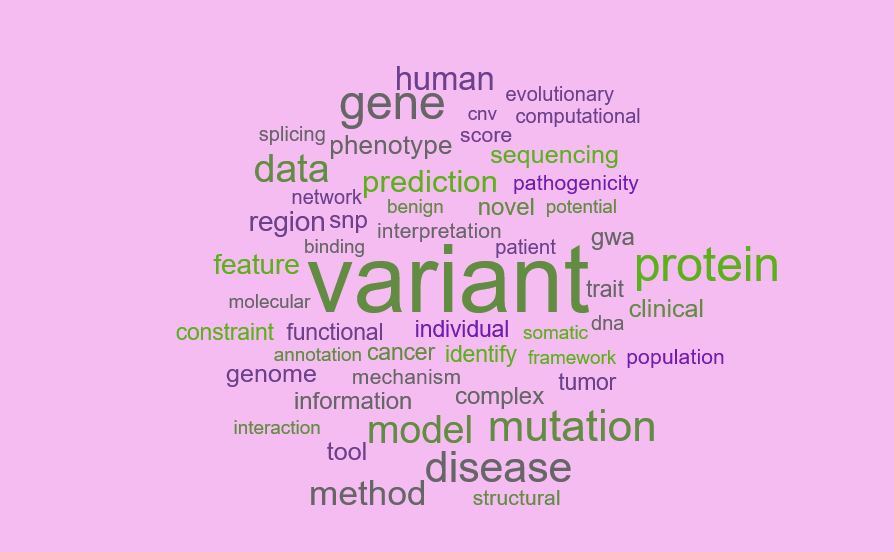
Submission Guidelines
All submission MUST select a presenting author. The presenting author MUST be marked as a corresponding author. Presenters of accepted abstracts are required to make the presentation themselves, and must register and pay to attend the conference. Submitters may choose to have their submission reviewed for: talk or poster or poster only. If you select talk or poster and are unsuccessful for a talk your abstract will automatically be considered for a poster presentation. Submission deadlines are posted in the deadlines section or key dates page.
During the submission process you will submit to the COSI or open session track that most reflects your research area. You will have the option to identify two other tracks that may also be suited to your research area during your submission.
- All abstracts must be submitted using the conference submission site by the abstract deadlines, posted in the deadlines section or key dates page. (You have until 11:59 p.m. Any Time Zone).
- Accepted abstracts (maximum 250 words) will be posted on the conference website. For authors requesting a talk you should upload a long abstract of up to two (2) pages in PDF format during the submission process. *Do not submit more than two pages* It is best to check individual COSI websites for specific information regarding program goals and guidelines.
NOTE: CAMDA submitters should include a 3-5 page long abstract PDF - The 250 word abstract should be a brief and concise summary of the background/motivation for the study, method and result(s), as well as conclusion/statement of significance. The abstract is submitted through the EasyChair submission system. If you are submitting for a talk a PDF (2 pages maximum) can be uploaded to provide additional details including figures and graphics that support the main points of the abstract.
Your abstract must not contain your title/position or any personal information (e.g. affiliation). These details will be collected through the EasyChair submission system.
Selected Abstract talks will be presented in tracks that run in parallel at the conference. The length of a talk is determined by individual COSI tracks. Oral presentation schedules for abstracts will be announced after acceptance notifications directly by the COSI track organizers.
Review Process
All submissions will be evaluated by a program committee. Submitters may choose to have their submission reviewed for talk or poster or poster only. If you select talk or poster and are unsuccessful for a talk your abstract will automatically be considered for a poster.
Posters advertising commercial software will be rejected from this poster session and/or removed from the conference without notice. There is a separate space for such posters in the exhibition area. If you have an industry poster, contact
Poster Details
Scientific Research Exchange - Posters Presentation Hours
10:00 AM - 11:00 AM & 4:00 PM - 5:00 PM July 21-24, 2025
Poster schedule can be found on the poster page once available.
Poster Display Size
Recommended poster size is A0 size (84.1cm wide and 118.9cm tall).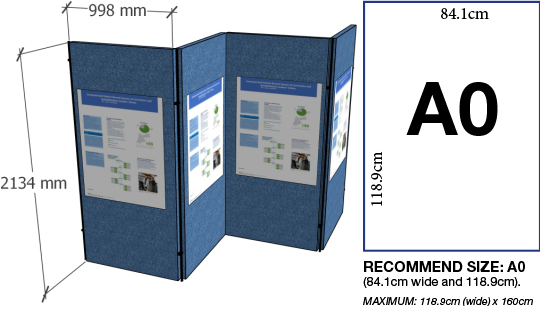
Click to enlarge
*No onsite poster printing is available*
Late-breaking Posters
After the initial submission deadline, late-breaking posters can be submitted. The submission window is notably smaller, be sure not to miss deadlines posted in the deadlines section or key dates page, as extensions cannot be granted.
Institutional Research
Not-for-profit research institutes and universities are able to submit their research findings as part of the call for posters. This will be displayed within the topic area of Institutional Research.
Reviews of Fields or Techniques
Individuals may choose to submit a poster presenting a review of a specific field or technique. These submissions do not need to contain original work from the author and are intended to be an introduction for individuals not familiar with the field or technique. These review are not meant to be advertisements (e.g. it is not acceptable that the poster is an advertisement for a book or other type of commercial publication).
Our Partnership with Showcare
Showcare is a trusted partner of ISCB. ISCB has authorized Showcare to build external pages in hopes to streamline your experience and enhance every step of your journey with ISCB.